


Peace News ran a story attempting to link political conflict in Mali to extreme weather events, particularly drought and flooding, which it says are caused by climate change. This is false. [some emphasis, links added]
There are myriad factors contributing to the internal, devastating strife in Mali, but climate change is not among them because the climate has not measurably changed from its historical pattern of repeated droughts punctuated by flooding during irregular rainy seasons.
Also, despite Mali’s problems, its economy and agricultural sector, which accounts for about 80 percent of the country’s workforce, has grown substantially over the period during which climate change has become a cause of international concern.
According to Peace News’ story, “Combating Climate Change for Peace in Mali”:
“Mali is one of the countries most vulnerable to climate change in the world. Between 1970 and 2020, the country experienced at least 40 major climate shocks, with drought affecting around 400,000 people each year and reducing crop revenues by US$9.5 million annually, according to the World Bank.
“In Mali, climate change is a major factor in conflict, according to an August 2025 report by the UN Sustainable Development Group. Due to the degradation of grazing lands from declining soil fertility, the report says, farmers are expanding their cultivation into traditional herding routes. This has led to violent conflicts between farmers and herders.”
Almost every statement made in those two paragraphs is false or misleading. First, to understand if climate change has affected Mali significantly, one must understand its geography and climate history.
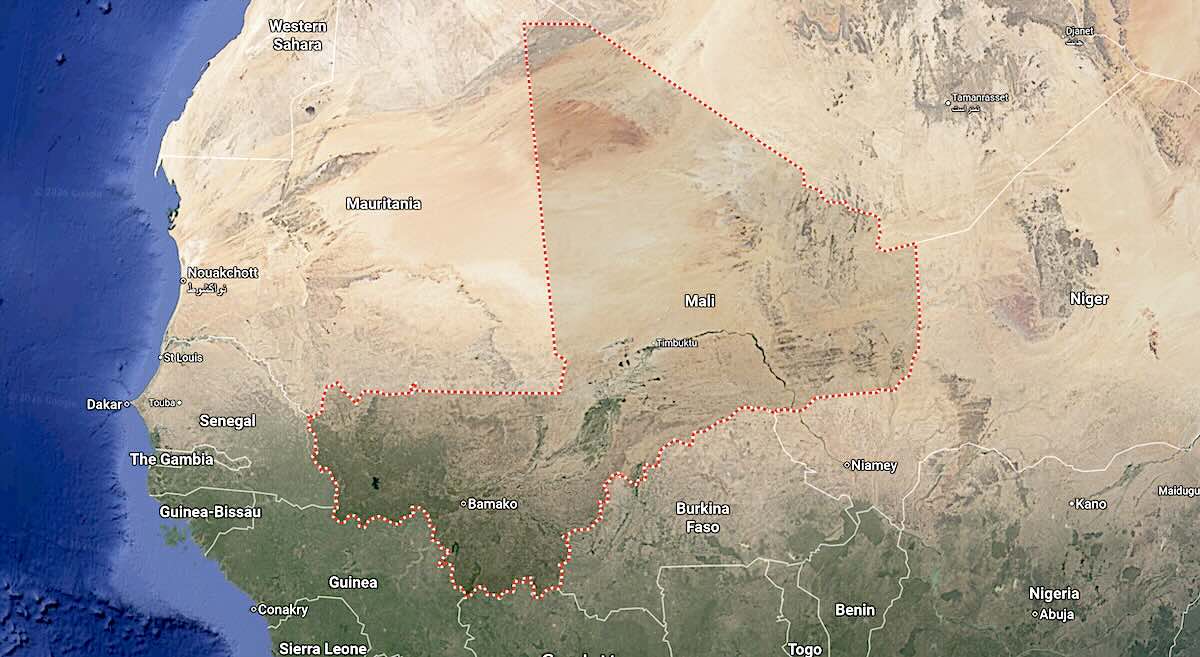
Mali is now and has historically been an extremely arid country, lying along the thermal equator in the region commonly referred to as the torrid zone.
It is among the hottest countries in the world, with the Southern Sahara Desert dominating the vast majority of its territory. In recent decades, Mali’s temperatures have not appreciably increased, so warming can’t be driving any changes in extreme weather.
In fact, evidence suggests that Mali, like the Earth in general, has greened extensively during the recent period of climate change, with hundreds of square miles of the Sahara Desert in the country being reclaimed by vegetation, both crops intentionally planted and forests and grasslands naturally springing up (see the image below).

Any conflicts between herders and farmers in Mali are due to land now becoming suitable for farming that wasn’t previously, and the lack of secure property rights – an institutional failure of government – for the herders.
To the extent that some areas have declining soil fertility, that is due to the types of cash crops that dominate in Mali. Cotton, Mali’s top cash crop, is a mineral and water-intensive crop to grow.
Decades of monocropping cotton deplete the soil. If minerals are not added back through the application of modern fertilizers, traditional fertilizers, or by rotating crops, the soil becomes depleted.
Absent secure, defined, and legally defensible property rights, farmers are likely to move on to more fertile ground. In Mali, this is common, creating conflict. But climate change is not the cause of this.
Both droughts and periodic floods have been common throughout Mali’s history, including during the 1960s and 1970s when carbon dioxide (CO2) concentrations and the global average temperature were both lower than today.
The Peace News article presents no evidence or data indicating either type of weather-related event has become more frequent or severe in recent years because neither has.
Finally, the hard data about Mali’s agricultural and economic growth refutes claims that recent climate change has left Mali’s population worse off.
Mali’s main crops have all increased significantly. Thus, it is not surprising that because 80 percent of Mali’s workforce is involved with agriculture, the country’s GDP has grown dramatically over the past 30 years.
Data from the U.N. Food and Agriculture Organization show that in Mali, from 1994 to 2024, amid mild global warming:
- Groundnut production (primarily peanuts) has increased by more than 131 percent;
- Maize production has grown by approximately 1,126 percent;
- Mango production has expanded by more than 3,604 percent;
- Cotton production has increased by about 87 percent;
- Millet production had grown by a little more than 1,211 percent; and
- Sorghum production has improved by nearly 1,199 percent. (see the figure below)

The point is that not a single top agricultural crop grown in Mali for either domestic consumption or for commercial sale has seen a decline in production, despite the normal ups and downs of Mali’s seasons of drought and floods.
Largely due to improved agricultural production, although mining plays a role as well, the World Bank reports that Mali’s GDP growth has been dramatic in recent decades. (see the graphs, below).

-Or-
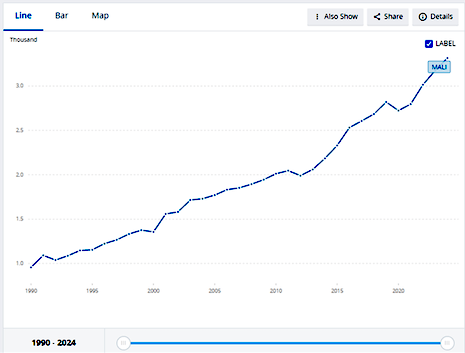
Any way one measures Mali’s economic performance, it shows substantial growth during recent decades that media outlets have constantly proclaimed to be the warmest on record.
In the end, Peace News couldn’t see the forest for the trees, focusing on anecdotal claims of hardship attributed to climate change, when the larger dataset shows substantial economic progress benefiting the people of Mali.
The author of Peace News’ article, Tara Abhasakun, evidently couldn’t be bothered to look beyond the narrative she had created that climate change was causing strife and conflict in Mali.
Abhasakun should have checked the facts on the ground, specifically: Mali’s geography, climatic history, internal politics, and data on crop production and economic growth.
Perhaps a story this light on facts is not surprising coming from an outlet dedicated to a cause: in this case, the noble cause of peace. One can agree with the goal without jettisoning the truth.
Read more at Climate Realism


More reason the M.S. Media cant ever be trusted for the truth