


The most recent climate stupidity suggests that American factories report their greenhouse gas emissions. As we learned from our country’s first cap-and-trade rule in California, reporting was the first step toward the required reduction of clean-burning natural gas. [some emphasis, links added]
Most factories in Southern California have closed because of that rule. It required a 75 percent reduction of natural gas over five years, the factories’ only heat source.
At our Weights and Measures gas-physics test facility in California, we tested carbon dioxide (CO2). It cools 20 degrees in less than four minutes. It cannot possibly retain heat from day to day (global warming).
We also tested our humid atmosphere, including the trace gases therein. That cools about one degree every 32 minutes or 20 degrees in roughly 11 hours.
These tests prove that no gas – not CO2, nitrogen, methane, nor even humid air – retains heat from day to day.
The scientific reality is that there is no such thing as a greenhouse gas that retains heat from day to day.
So, what is the source of the false greenhouse theory? More importantly, why is it wrong? After Al Gore arranged $22 billion annually for universities to study global warming, professors dredged up John Tyndall’s 1861 greenhouse theory to justify regulating CO2.
Keep in mind that their motive was political, not scientific, when they decided to vilify CO2 because it’s produced from the combustion of fossil fuels.
Combustion of natural gas (methane) produces CO2 and H2O, the two building blocks of photosynthesis and organic life on this planet. Burning of natural gas is harmless and most likely beneficial to the environment. I view it as recycling of Earth’s natural compost (oil).
John Tyndall’s experiment and thirty-six-page paper, written in 1861, is the much-referenced scientific study behind the greenhouse theory and global warming.
No new significant science has been added to the greenhouse theory since the paper was written. Advocates describe the theory as he described it. They even use some of Tyndall’s exact words from the paper.
John Tyndall spent two years building a large device [pictured below] that used a galvanometer indicator to measure gas temperature. The galvanometer did not quantify temperature; it measured only the movement of a gauge with gradation marks from 0 to 100.

His use of an indicator with no calibrated temperature numbers led to his false conclusion, as you will read below.
On page three of his study, Tyndall described his measuring chamber as polished brass with rock-salt lenses at each end. The subject gas would be trapped inside the brass chamber, and he produced heat that passed through both rock-salt lenses to a sensing device.
Sensing at the end of the chamber was a thermopile, which detects heat emanating through the air. It then sent a variable current to the galvanometer indicator.
He should have simply used a bi-metal temperature gauge, which had been invented about sixty years prior. It seems that since the galvanometer and the thermopile devices were new inventions, he wanted to use them.
Tyndall noted that the galvanometer’s needle wagged like a compass. This was likely caused by the thermopile, which is affected by open-atmosphere interference.
He made his first attempt to mitigate this, saying: “I therefore sought to replace the Berlin coil with a less magnetic one.” So, the galvanometer that he had purchased was no longer calibrated for accuracy.

Our company never would have given our weights and measures approval for John Tyndall’s device due to this and several other reasons.
The inaccuracy led Tyndall to report a zero temperature reading for dry air, indicating limitations in his instrument.
In reality, dry air warms substantially under solar heating, as seen in places like Death Valley, where air temperatures rise dramatically despite low humidity.
Then Tyndall lists in increasing temperatures carbonic oxide, nitrous oxide, carbonic acid, and olefiant gas. Olefiant gas is ethylene, which is the largest molecule in the group.
These are called compound molecules because they are two or more connected atoms, like CO2. Air is a mixture of unconnected atoms, mostly oxygen and nitrogen.
When his galvanometer registered 1 on a scale of 100 for air and 70.3 for another gas (pp. 7–9), Tyndall concluded the latter gas produced a temperature 70.3 times greater than air.
At this point, he ended his testing of relative temperature absorption to outline what is now the greenhouse theory: since air resulted in almost no temperature response, it was, in Tyndall’s words, “transparent to the rays of the sun,” which penetrate the air to warm the Earth’s surface.
Some of the temperature that is absorbed by the Earth is radiated back up, and a small amount of temperature is absorbed by larger compound-molecule gases (greenhouse gases in today’s jargon).
This sounds good; however, CO2 does not rise in the atmosphere. It weighs the same as propane with a specific gravity of 1.52. It seeks low points as does rainwater.
Furthermore, the inaccuracy of his instrument and measuring air at near zero temperature led to his false conclusion about a so-called greenhouse effect.
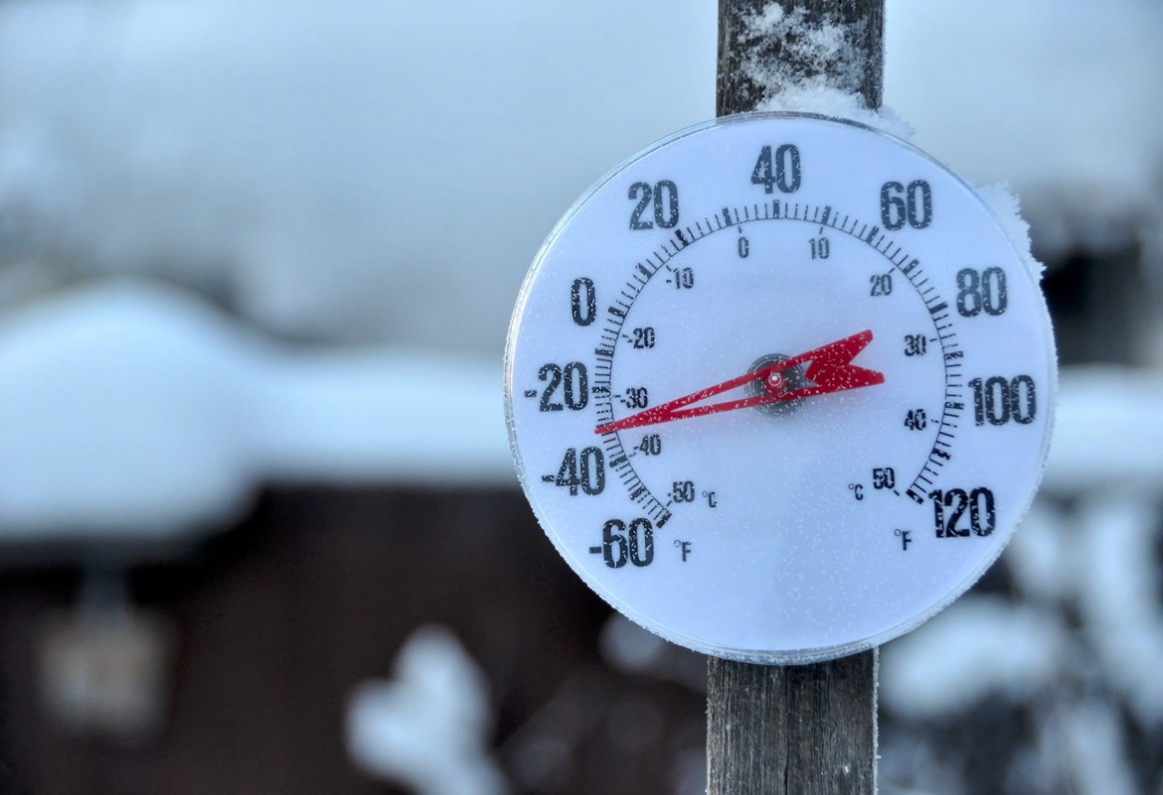
The temperature he was measuring was obviously extremely low and below the accuracy range of his instrument.
Consider that the temperature transmitted from a single candle-type flame—passing under a water-filled copper chamber, through the copper wall, through a rock-salt lens, into a brass chamber that would have leaked heat, through another rock-salt lens, and finally through open atmosphere—could have been below one degree Fahrenheit for all we know.
All the temperatures would have been within one degree of each other, not 70 times greater.
Throughout the final pages of his paper, Tyndall discussed these so-called enormous differences when, in fact, they were likely so small that accurately measured results would disprove his greenhouse theory.
Our experiments proved this to be true. The cooling times of dry air and CO2 are very nearly the same. There is little difference in heat absorption between small-molecule gases and large-molecule gases.
It is water vapor that retains the vast amount of heat, not the size of the molecule. Large-molecule (compound) gases retain heat for minutes, not days.
There is no such thing as a greenhouse gas or any gas, including vaporous air, that retains heat from day to day (global warming). Greenhouse gases are a scientific myth.
James T. Moodey owned a Weights and Measures gas-physics test facility. A condensed version of the author’s science paper, “Three Proofs Carbon Dioxide Causes No Warming in the Atmosphere — No Gas Causes Warming,” is here and in his book The Ladder Out of Poverty.




All we have to do to access the impact of carbon dioxide on temperature is to look at empirical data. The roman warm period, the medieval warm period, the world wide hot year of 1896 and hot period of the 1930’s were caused at times when carbon dioxide is consider not to be a factor. The same is true of the mini ice age. The warming pause earlier in this century was at a time when carbon dioxide was high and increasing rapidly. The motivation for making carbon dioxide a bad guy was obviously political.
Keep in mind that their motive was political, not scientific…
Definitely not scientific but I’d say the bigger reason was financial rather than political. Universities and their research departments are all about getting grants so you dangle a few million dollars in front of them asking for “research” that will give them the results they want you can bet there will be takers out there.
Due to the American and European Clean Air legislation of the 1970’s to reduce the amount of industrial SO2 aerosol pollution of the atmosphere, temperatures began rising in 1980 because the cleaner air increased the intensity of the solar radiation striking the Earth’s lower atmosphere and its surface, inevitably causing warming.
In Dr. James Hansen’s presentation to the U.S. Senate committee on Energy and Natural resources on June 23, 1988, he stated that temperatures then [(+) 0.28 deg. C,] were the highest ever recorded in the history of instrumental temperatures, which was about 100 years.
This he attributed to the greenhouse effect, when in fact, they were due to decreasing industrial SO2 aerosol pollution of the atmosphere.
Unfortunately, almost everyone accepted his claim that the warming was due to greenhouse gasses, and millions of people are now suffering because of governmental efforts to reduce the amount of CO2 in the atmosphere, and trillions of dollars have been wasted in a totally useless effort, all because of Dr. James Hansen’s wrong attribution!
so2 and other air pollution reduction is probably the major cause of daytime warming
reduction of air pollution does not affect nighttime warming
since 1975 nighttime (Tmin) warming was roughly 55% of total warming
in addition the reduction of the total percentage of cloudiness in the past 40 years also caused daytime warming
nighttime warming (TMIN) is caused by CO2 which is the primary cause of Tavg warming since 1975
you have been overemphasizing SO2 and under emphasizing CO2 for many years and will never stop
Nighttime warming is due to man made materials (concrete, asphalt and brick) retaining heat more than natural surfaces. Not from CO2. This is easily demonstrated by flocks of blackbirds (Grackles). On cold evenings and nights they congregate and roost near dark asphalt parking lots, which have absorbed heat. Grackles are smarter than climate alarmists.
The point of the article is that all gases, including CO2, cool too quckly to retain heat from day to day (global waarming).
conservatives love to hear the false claim that CO2 does nothing in this website provides them with what they love. … the only point of the article appears to be to spread your CO2 junk science ….
I have provided a summary of the scientific knowledge about CO2 which is something you ought to read:
Solid to Gas (Sublimation):
When “dry ice” (solid CO2) turns into a gas, it pulls heat from its surroundings. This is why it is such an effective coolant; the process of sublimation absorbs roughly 25–26 kJ/mol of energy
Liquid to Gas (Vaporization):
Similarly, vaporization is endothermic, meaning the liquid absorbs heat to become a gas. This principle is used in refrigeration and fire extinguishers, where the rapid expansion and phase change of
creates a significant cooling effect.
Carbon dioxide only releases heat during the reverse processes: condensation (gas to liquid) or deposition (gas to solid).
Carbon dioxide (CO2) does not cause cooling in the lower atmosphere because its molecular structure allows it to absorb infrared radiation (heat) emitted from the Earth’s surface, preventing that heat from escaping into space. This trapped energy is re-emitted in all directions, including back toward the surface, causing a net warming effect known as the greenhouse effect.
Your knowledge of HS Chemistry is quite amazing but has nothing to do with your claims on CO2 being a greenhouse gas heating up the world. But glad you learned something from HS.
Yes, all gases do that, well done!
Although I believe greenhouse theory is false, it seems to me that these experiments just prove the different thermal inertia (heat capacity) of gases. Greenhouse theory is not about the heat capacity according to its proponents.
CO2 has a lower specific heat capacity than air.
https://www.engineeringtoolbox.com/specific-heat-ratio-d_608.html
The specific heat capacity of gases, including CO2, is a measure of how much heat is required to raise the temperature of one unit of mass of the gas by one unit of temperature.
For CO2, the specific heat capacity is lower than that of air, which is a key factor in its role as a greenhouse gas.
This lower specific heat capacity means that CO2 requires less heat to achieve the same temperature increase, which is why it can trap heat in the atmosphere more effectively than air.
Once a greenhouse gas molecule absorbs radiation, it quickly transfers that energy to surrounding N2 and O2 molecules through collisions.
Storage: These non-greenhouse gases act as the primary “storage tank” for the heat. The total heat capacity of the atmosphere dictates how much energy is required to raise the temperature of the entire “air blanket.
A gas’s “heat capacity” (the energy needed to raise its temperature) does not determine if it is a greenhouse gas.
The most significant “heat capacity” in the climate system isn’t in the air, but in the oceans
The global oceans have a massive heat capacity, roughly 1,000 times greater than the atmosphere. Because of this, the oceans absorb over 90% of the excess heat trapped by greenhouse gases.
the greenhouse effect is real.
Discovered in 1859, supported by evidence, and has not been falsified in 166 years. 99.9% of scientists today say the greenhouse effect is real.
It always worries me when consensus is used as part of an argument, didn’t Galileo fall foul of this?
Consensus has no place in real science. Every time Richard uses that argument he is revealing his lack of scientific training. In the area of climate change it is even worse in that they have manufactured a consensus. Only scientists who produce politically correct results get funding. In addition, the technical journals will not publish articles that go against the climate change narrative. So the movement artificially creates a consensus, and then uses that as proof to support its cause.
“ For CO2, the specific heat capacity is lower than that of air, which is a key factor in its role as a greenhouse gas.”
Followed by:
“A gas’s “heat capacity” (the energy needed to raise its temperature) does not determine if it is a greenhouse gas.”
“Once a greenhouse gas molecule absorbs radiation, it quickly transfers that energy to surrounding N2 and O2 molecules through collisions.”
No it doesn’t, there is so much information missing from this assertion that it does not deserve a better response.
You are also conflating radiation and heat. A very typical mistake (trick) you all employ.
“Greenhouse effect” or “Air blanket”, (insulation) which is it?
You are so well informed you seem to be able to have all ways, remarkable!